



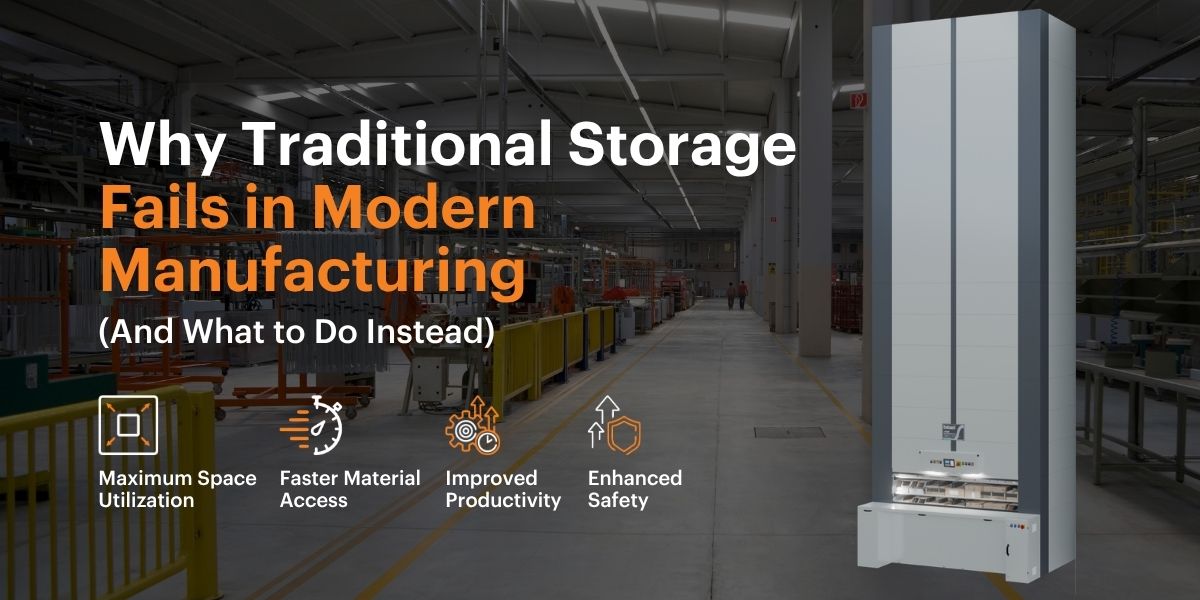
In many manufacturing facilities, production systems are constantly being upgraded – machines are faster, processes are optimized, and quality standards are improving.
But one area often remains unchanged: storage systems.
Traditional storage methods like floor stacking and static racks may have worked earlier, but in today’s fast-paced manufacturing environment, they often become a hidden bottleneck.
The Problem with Traditional Storage
Inefficient Use of Space
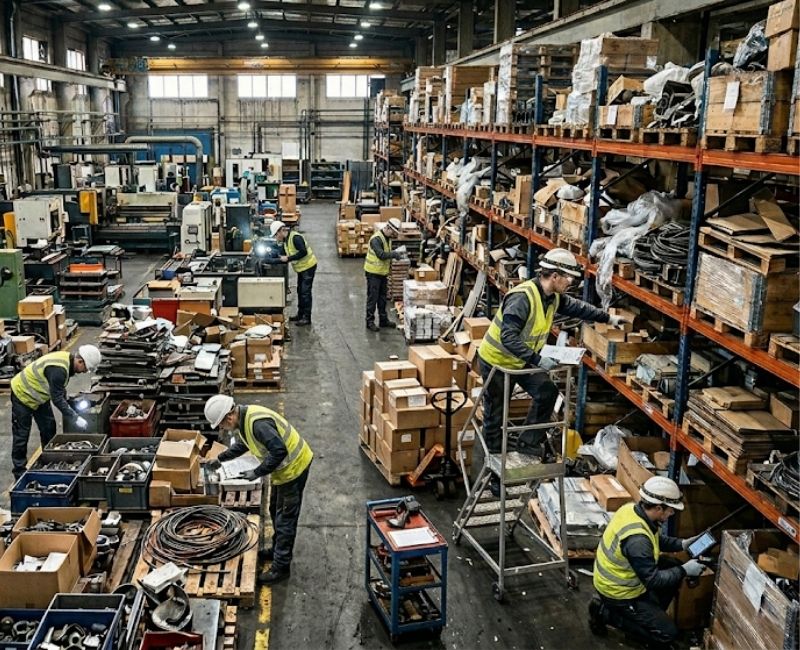
Most factories rely heavily on floor-based storage. As production increases, storage expands horizontally, consuming valuable floor space.
The result:
- Congested shop floors
- Limited movement space
- Reduced operational efficiency
Time Lost in Searching & Handling
Operators often spend significant time:
- Searching for components
- Walking between racks
- Manually picking items
This leads to:
- Increased idle time
- Reduced productivity
- Operator fatigue
Lack of Organization & Inventory Control
Without structured storage systems:
- Materials get misplaced
- Inventory tracking becomes difficult
- Errors in picking increase
Safety Concerns
Manual handling and climbing racks can lead to:
- Workplace injuries
- Damage to materials
- Compliance issues
What Modern Manufacturing Needs
Today’s manufacturing demands:
- Faster access to materials
- Better space utilization
- Reduced manual effort
- Improved organization
In short: efficient, intelligent storage systems
The Shift: From Floor Storage to Vertical Storage
Instead of expanding horizontally, modern storage systems utilize vertical space.
This approach transforms storage from:
- Passive racks → Active systems
- Manual access → Automated retrieval
Introducing Vertical Carousel Storage Systems
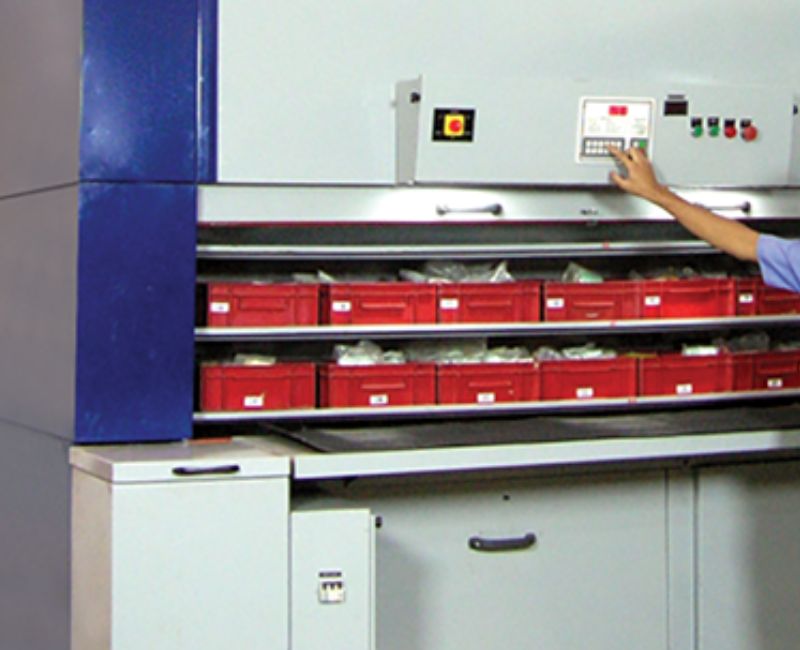
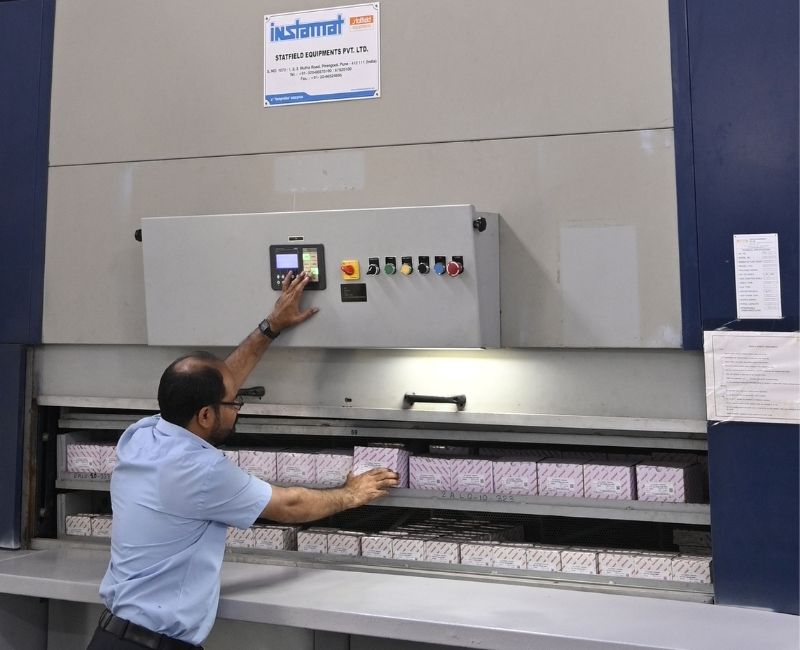
Vertical carousel systems (like Statfield’s Instamat) are designed to:
- Store materials vertically
- Automatically bring items to the operator
- Optimize storage density
This is often called a “goods-to-person” system
Key Benefits of Vertical Storage Systems
- Maximum Space Utilization: Use unused vertical height instead of expanding floor space
- Faster Material Access: No searching – materials come directly to the operator
- Improved Productivity: Less movement = More working time
- Better Organization: Structured storage improves inventory control
- Enhanced Safety: Minimal manual handling and climbing
Traditional Storage vs Vertical Storage
| Factor | Traditional Storage | Vertical Storage |
|---|---|---|
| Space Usage | Horizontal | Vertical optimized |
| Access Time | High | Low |
| Manual Effort | High | Minimal |
| Organization | Limited | Structured |
| Safety | Moderate risk | Improved safety |
When Should You Consider Upgrading?
You should evaluate your storage system if:
- Floor space is getting congested
- Operators spend time searching for materials
- Inventory errors are frequent
- Production is increasing but storage isn’t keeping up
While manufacturing systems have evolved significantly, storage is often overlooked.
Traditional storage methods may seem simple, but they come with hidden costs in terms of space, time, and efficiency.
By shifting to modern solutions like vertical carousel systems, industries can:
- Optimize space
- Improve productivity
- Enhance operational efficiency
In today’s competitive environment, efficient storage is no longer optional – it’s essential.