



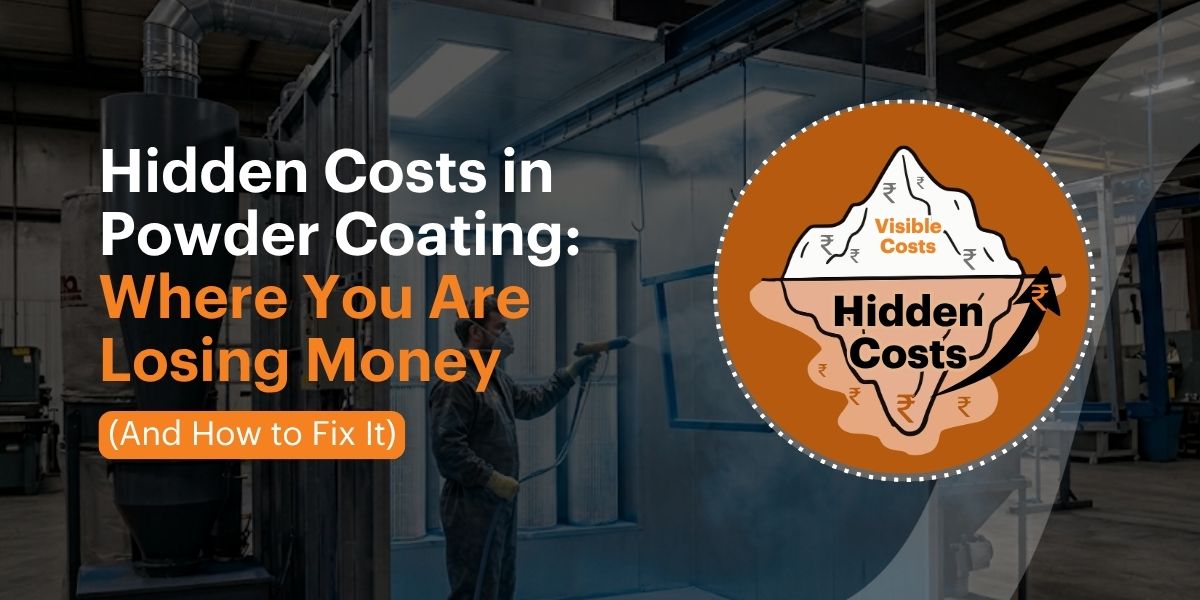
Powder coating is known for being efficient and cost-effective. But in many factories, the actual cost of coating is higher than it appears. Not because of major failures, but because of small, unnoticed losses happening every day. A little extra powder here. A part reworked there. A few seconds lost in every cycle.
Individually, these don’t seem like a problem. But over time, they quietly increase cost and reduce efficiency.
Let’s look at where this really happens.
1. Powder Wastage – When spraying, not all powder lands on the part. Some of it drifts away as overspray. It may not look significant in the moment, but it directly increases material consumption.
Better spray control and proper settings can make a big difference here, reducing waste without changing the process.
2. Rework – Inconsistent coating often leads to defects like uneven finish or poor coverage. These parts don’t move forward. They come back. Rework means – more time, more labour, more material and most importantly – delayed production.
Consistency in application and reliable equipment can significantly reduce this cycle.
3. Material Movement – Even when everything seems to be working, irregular conveyor movement can affect the entire process. Uneven spacing or speed variations lead to – Inconsistent coating time, Production bottlenecks.
A balanced and controlled flow improves both quality and output.
4. Manual Dependency – When coating relies heavily on manual effort, results vary from operator to operator. Fatigue builds up. Adjustments keep happening. Consistency becomes difficult.
Introducing controlled or semi-automated systems helps reduce this dependency and improves overall output.
5. Equipment – Sometimes, the setup has been running for years, so it’s rarely questioned. But outdated or unsuitable equipment can reduce efficiency, increase maintenance & affect consistency.
Upgrading the right components can improve performance without major process changes.
None of these issues are dramatic.
They don’t stop production. They don’t show up immediately in reports. But together, they result in higher cost per part, lower productivity, reduced profitability.
You don’t always need a complete overhaul.
Often, small changes can create a big impact such as better control in application, smoother material flow, reduced manual dependency, reliable, efficient equipment.
Powder coating is efficient, but only when the process is controlled. Because in the end, efficiency is not just about production, it’s about control, consistency, and awareness.