



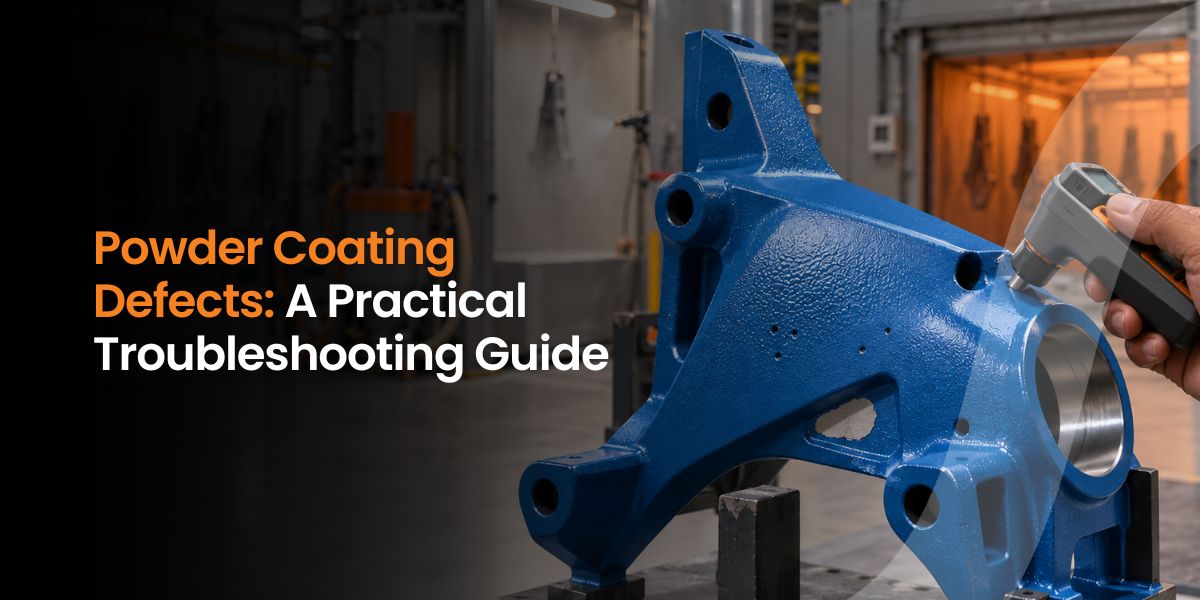
Powder Coating Defects: A Practical Troubleshooting Guide
A component leaves the oven with uneven coverage, other shows pinholes. The next batch begins peeling during inspection.
The spray gun is often blamed first. But powder coating defects can begin with the component, compressed air, powder feeding, application settings, grounding or curing.
Every repeated defect adds inspection, rework and production delays.
Orange Peel in Powder Coating
Orange peel creates a rough surface resembling citrus skin. Excessive film thickness is one of the first conditions to check.
Also review the gun distance, voltage, powder output and curing cycle. Component geometry and powder behaviour may also influence how the coating flows.
Begin with film thickness before changing multiple settings.
Pinholes and Craters
Small holes or depressions may indicate moisture, oil contamination, damp powder or substrate outgassing.
Inspect the compressed-air quality, air dryer, powder condition and component surface. For components prone to outgassing, evaluate suitable pre-heating or pre-baking with your process and powder supplier.
Trace contamination and outgassing before blaming the gun.
Fish Eyes
Fish eyes appear when the coating pulls away from small areas of the surface.
Common causes include oil, silicone, inadequate cleaning or contamination remaining from an earlier colour. Review pre-treatment and booth-cleaning practices carefully.
A clean coating process begins with a clean surface.
Peeling and Chipping
Weak adhesion may be connected with inadequate surface preparation, pre-treatment variation or incomplete curing.
Check the cleaning and rinsing stages. Confirm that curing follows the powder supplier’s recommended schedule and is measured at the component, not only through the oven display.
Good adhesion depends on preparation and curing working together.
Bare Patches in Recesses
Deep corners and complex profiles can be difficult to coat evenly. Component geometry, gun angle, voltage and poor grounding may all contribute.
Inspect the suspension point and clean powder-coated hooks regularly to maintain reliable grounding.
The application settings must follow the component geometry.
Six Checkpoints for Powder Coating Troubleshooting
Before adjusting the equipment, confirm that:
- Components are clean, dry and pretreated
- Compressed air is dry and oil-free
- Hooks are clean and components are grounded
- Powder feeds and fluidises consistently
- Film thickness is measured
- Curing follows the recommended schedule
QC should record the defect location, component batch, powder batch and film thickness. Production should review application settings and component movement. Maintenance should verify the air, feed and grounding conditions.
Change one condition at a time, or you may never know what solved the problem.
Repeat Defects Need a System-Level Check
If the same powder coating problems continue after these checks, examine the complete process. The cause may lie in the gun, powder feed, booth airflow, component handling, operator practice or curing conditions.
Reliable troubleshooting looks at the complete coating line, not one machine in isolation.
Need Help Tracing a Powder Coating Defect?
Share the component details, defect photographs, powder type, film thickness and operating conditions with Statfield for an application review.
Diagnose the complete process before replacing the equipment.